Adaptation #107: Victoria “Ghoulish” Frankenstein, MD

header107There are just too many things to talk about with Pemberley Digital latest endeavor Frankenstein MD. After reading a record number of comments, the hosts go over how a gender-swapped Frankenstein is pulled off, Victoria’s likability, and what things they wish had been included. Pacing, sexism in STEM, Steve’s acting ability… it all leads to a jam-packed episode!

If this series got you thinking about reading Mary Shelley’s novel, check out Kendyl’s book review!

iTunesTwitterFacebookTumblrYouTubeDownload This Episode

For a similar discussions, check out our episodes on Emma Approved, The Lizzie Bennet Diaries, I, Frankenstein, Frankenweenie, and Once Upon a Time (season 2 and 3).

Continue reading

Vlog: Best Friendship Chemistry in Books and Movies

In which Jessica tells you our picks for the best friendships in books and on screen.

iTunesTwitterFacebookTumblrYouTube

Vlog: Best Horror Adaptations // Horror Month

In which Sarah explains the why the best horror adaptations had us quaking in our boots!

iTunesTwitterFacebookTumblrYouTube

Vlog: Worst Horror Adaptations // Horror Month

In which Jessica gets a little worked up over our HORROR MONTH choices for Worst Horror Adaptations!

iTunesTwitterFacebookTumblrYouTube


Adaptation #98: Emma’s Approved Improvements

header098Back to discuss another Pemberley Digital creation, the hosts get in depth about Emma Approved, a modern day interpretation of Jane Austen’s Emma. What translated well, what was shaky and who do we find ourselves loving even more? Have a listen and find out!

Don’t forget to listen to our discussion of Jane Austen’s Emma here!

iTunesTwitterFacebookTumblrYouTubeDownload This Episode

For a similar discussions, check out our episodes on The Lizzie Bennet Diaries, The Fault in Our Stars, Sherlock (the series) and our commentary on The Princess Bride

Continue reading

Starting the Season of Scares with Origin of Horror – Frankenstein

riverrampress's avatarRiver Ram Press #InspireWriters #InspireReaders

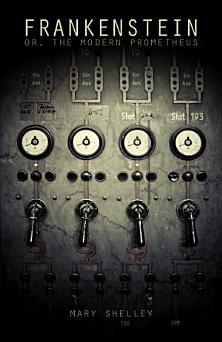
Frankenstein by Mary Shelley – a book review by Kendyl Bryantfrankenstein_cover

In honor of last month’s premiere of Frankenstein MD, a web series adaptation by PBS Digital and Pemberley Digital, this month I decided to read Mary Shelley’s 1818 novel for the first time. I’ve seen the film, of course, and some other adaptations of the story such as Frankenweenie (2012) and I, Frankenstein (2014) but I had it on good authority that the novel is quite different to the tale that we all know.

The premise remains the same – Victor Frankenstein, obsessed with the science of life, builds an oversized, humanoid being that he brings to life. However, the way that the story unfolds after the creation of the “monster” is a bit of a departure. Shelley’s Frankenstein is disgusted with what he has done as soon as the monster comes to life therefore abandoning the being and…

View original post 450 more words

Author Spotlight Vlog: Jane Austen

In which Jenn turns our author spotlight onto the unparalleled Jane Austen.

iTunesTwitterFacebookTumblrYouTube


Vlog: Books That Should Not Be Films

In which we list what books we hope they don’t try to make into films.

iTunesTwitterFacebookTumblrYouTube


Frankenstein or The Modern Prometheus on the London Stage

frank3It is hard to know what to expect from a stage production of Frankenstein, especially when all of the films called Frankenstein have been off the mark on their adaptation of the novel by Mary Shelley. The production for the London Stage was written by Nick Dear (The Art of Success), published by Faber and Faber, directed by Danny Boyle (director of the opening ceremony at the 2012 London Olympics; Trainspotting, Slumdog Millionaire), and starred Jonny Lee Miller (Elementary) as the Creature and Benedict Cumberbatch (Sherlock) as Dr. Victor Frankenstein. When this production was put up, on alternating nights Miller and Cumberbatch would switch parts, and although I would have loved to see both, I was only able to see the aforementioned one.

Shelley started writing the story when she was eighteen, and the novel was published when she was twenty. The first edition was published anonymously in London in 1818. Shelley’s name appears on the second edition, published in France in 1823 and was always titled Frankenstein or The Modern Prometheus, which influenced the creators and actors from this production. They also said that even though it takes place so long ago, much of the story still resonates with current events. It was written in an age before science fiction was a genre, when Gothic stories reigned, and the novel stands out above others riddled with fear of what lengths people will take for science, and what immoral acts can come from it. Can Man really play God? It was the first book to ask.

The production begins with a lit circle in the middle of the stage, something of a womb made of canvas and wood. Inside is the Creature being brought to life and he is birthed from this and onto the stage in view. For a while there is a bit of awkward flailing and noise-making as the Creature learns to crawl, stand, walk, run and emit some form of speech. When Victor enters and sees what he has done, he covers the Creature and abandons him, running for his life.

The stage design was Gothic and minimalist- very fitting for this novel. It was dark and sparse most of the time, with only flares of something more, like a patch of grass or a bonfire, or a small structure for a house, etc. There were some scenes that had much more, like the train and rail workers coming in, which was a spectacular sight to see, or where Victor lived and worked. The center part of the stage rotated and was utilized for space and to move scenery. There was also a curtain of lights above, a mass of light bulbs hanging from the rafters, and when they were lit it was a fantastic sight. All in all, the staging was very well thought out and employed very successfully.

The amazing thing about this production that has never happened in a straightforward adaptation of the novel (excluding I, Frankenstein, which could be considered an adaptation of the novel, but is also based on a graphic novel we discussed previously in a podcast) is that the voice of the Creature, his own thoughts and feelings, are so important and central to the production. This differs even from the novel, where although we heard the Creature speak, the story is told from Dr. Victor Frankenstein’s perspective. I have to applaud Nick Dear for taking this approach. This feature is what attracted him and was essential to this production, as Danny Boyle generally said, and unknowingly agreed with me about how previous adaptations of Frankenstein always took the Creature’s voice away, changing the point and the crux of the story.

A  curious yet fabulous decision was that the casting for this play went for a colorblind array of cast members. We never see Victor’s mother, but his father (M. Frankenstein), brother (William) and fiancée/wife (Elizabeth) were black, and as most people can easily tell, Benedict Cumberbatch is a very pale shade of white. For the time it represented, it was unlikely in all accounts. As a viewer today, the fiancée doesn’t make much difference, but the blood relatives did pull me away from the story for a while, if only because I was trying to figure out if his father was really his stepfather and his little brother actually his half-brother. However, I am one to love it when directors and casting turn things on their head and surprise people.

The acting, I expected, was going to be the highlight of the play, and they did not disappoint. It is no wonder that Benedict Cumberbatch and Jonny Lee Miller share both the Olivier Award and London Evening Standard Award for Best Actor for their respective performances. They brought the characters to life in a way that made you forget you were watching a play. When choosing which version to go see, I figured that Benedict could play either part very well, but I wanted to see what Jonny Lee Miller could do as the Creature.

For most of the first half of the play the Creature is left to roam through the dirty streets of London, hiding in the shadows and scrounging for food. Anytime he is seen, like when he saves a prostitute from an assault, she sees him and backs away wanting to leave him alone, which is the tamest way a person reacts to him.

As I have said in a previous podcast about the 1931 Frankenstein, the Creature Frankenstein creates is like a child. Everything around him is new and interesting and absolutely terrifying. That is Miller’s take on the Creature. When he comes to a patch of grass he plays on it, feels it and rolls in it. Rain is refreshing and amazing. The sun sets and the birds fly and he laughs and jumps around at all the new stimulation.

My only issue with his portrayal is that it walked a fine line between fabulous interpretation and offensive. This child-like Creature with put together parts and a newly awakened brain had some muscular and speech disabilities, which on one hand I can see how that fits, and on the other hand it took on the guise of someone mentally disabled with stutters, spitting and long pauses in between syllables of speech as he gathered his wits. When the Creature makes it out onto a farm and meets up with the blind man who takes him under his wing and teaches him literature and philosophy, his demeanor and mannerisms smooth out a bit, but still felt a little uncomfortable for me.

***Trigger Warning: Sexual Violence*** (skip next two paragraphs)

Still, the most uncomfortable moment was the culminating one, where Victor and Elizabeth have just wed in Geneva. Victor tells her to stay in her room while he and the guards go hunting the Creature. The Creature is actually hidden very well under the sheets of the bed and springs upon Elizabeth when Victor is away. At first, it seems that they are just going to talk. Elizabeth calms and tell him that they can be friends, which seems to be all that the Creature wants at this point, even though we know that he is desperate for someone like himself to be created.

The mood turns quickly as the Creature says that he feels bad that he has to do this and then proceeds to hold Elizabeth down on the bed and rapes her on stage. I do not remember that being part of the book and  I think that a disclaimer was warranted. It made me very upset and sick and while I want to applaud the actors and director for making me feel so much, it was a bit too much for me and I’m sure for other audience members.

Besides that, the production was highly engaging. There are so many moments that just tug at you: You watch the creature learn and grow, and you pity him; you see him commit his first crime, and anger takes hold; he pleads with his creator to make a companion, and you sympathize with him; Victor takes into account all the ways this could go wrong and destroys the companion after showing the Creature, and you don’t know what to feel; the Creature murders all that is near and dear for Victor, and you feel disgusted. In the end it all culminates with the both Victor and his Creature in the North Pole, where we learn that they are nearly one and the same: both monsters, both human. All the Creature wants is to not be alone.

This play was dark and gritty, it easily held up a mirror to the audience asking who is the real monster? And it was not afraid to go darker and deeper; nothing was held back. Nick Dear really understood the original novel and made a play worthy of it. I applaud all those who worked on this successful production and now I hope that I can see how Benedict portrays the Creature. Can’t wait!

Have any of you seen this production? Are you going to see it now? Let us know in the comments!
Literary Retellings: Youtube

I do believe that this is relevant.

Nicole's avatarInfusions of Wit from a Book Loving Fool

Untitled design

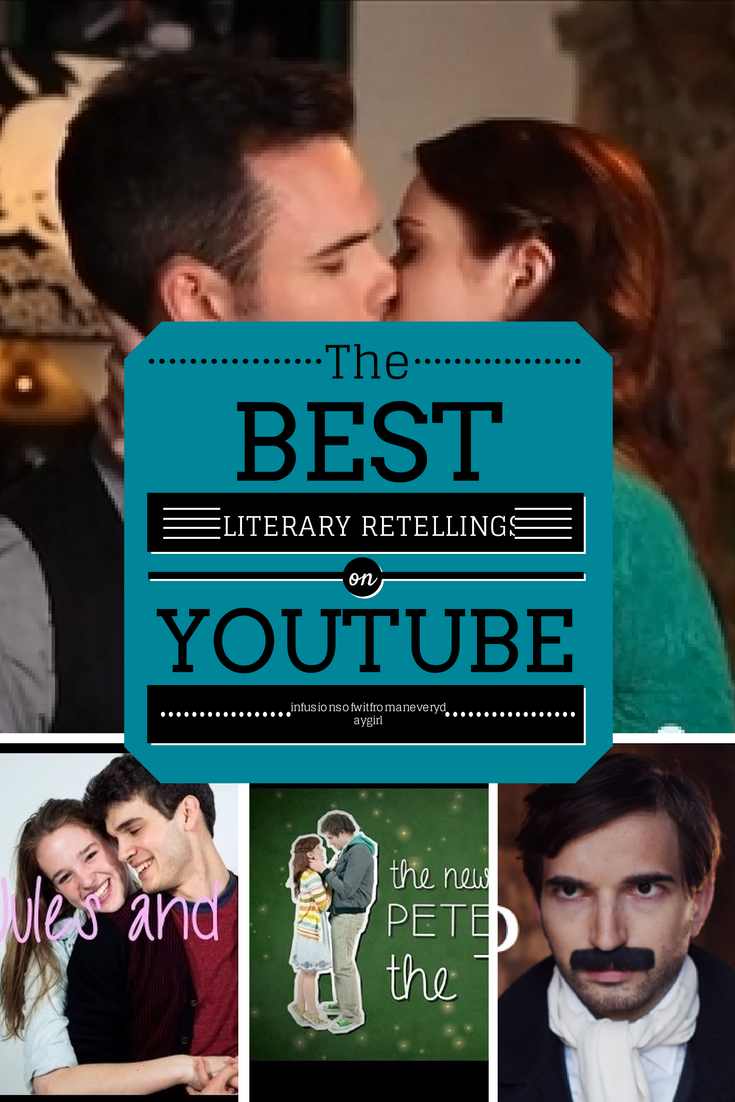
Recently, Hello Giggles wrote an article highlighting some of the best web series on Youtube: the literary retellings (if you click above, the link will take you there). I admire the article, but in my humble opinion they missed a few. In that spirit I decided to write my own little blurb about some of the best retellings on the interwebs. They’re listed in the order they popped into my head…

1. Jules andMonty. I just finished watching this and the end…oh the end. This is the retelling of Shakespeare’s Romeo and Juliet done by Tufts University students. It’s all student cast (with the exception of Friar Lawrence) and intersperses some of the original dialogue throughout. I found it a little odd, but after the first two episodes it became normal and I became entranced with Jules and Monty’s epic tale. It led me to believe that the story…

View original post 899 more words

Vlog: What Are We Reading? (May 2014)

In which we take this time to tell you what we’ve been reading, and ask what book your nose has been in.

iTunesTwitterFacebookTumblrYouTube

Related Podcasts:

#79: And Then There Were No More Biscuits

Vlog: Five Best Romantic Pairings

In which we tell you our picks for couples with the best romantic chemistry.

iTunesTwitterFacebookTumblrYouTube

Related Podcasts:

#42: All About the EL-BEE-DEE!

#44: Iron Man, Suit Up!

#53: Twice Upon a Fairytale

Fulfilling my voracious need to tell the world about Yulin Kuang and Shipwrecked

shipwreckedI have a new obsession and her name is Yulin Kuang.

That sounds creepy, but if there’s one thing I think I can trust internet fandom with, I hope it’s understanding that stage where you have just discovered a new creator and then must proceed to watch everything they have ever created. This has recently happened to me when I came across Shipwrecked‘s series Kissing in the Rain.

Kissing in the Rain is a transmedia YouTube project of the Shipwrecked team that includes Yulin Kuang, Sinead Persaud and Sean Persaud. It’s first chapter has just concluded and chapter two is due to begin May 5. Chapter one followed actors James and Lily, played by Mary Kate Wiles and Sean Persaud, as they are frequently cast as romantic leads in films that have them kissing in the rain. Each episode starts with the movie scene leading up to the kiss and then the director yells cut and the couple reverts to the actors awkwardly trying to fill the post-kiss silence.

The transmedia bit comes in with the encouragement and canonization of fan fiction. With each episode Yulin Kuang releases a companion drabble to add to the story of the two actors and then fans follow her lead. After going through the related tumblr tags and reading what the fans come up with, Yulin decides what to canonize and it gets reblogged on the official Shipwrecked tumblr and is official canon from that point forward.

If you’re interested in starting to watch, there is a very helpful post that pulls everything together here. There’s just a week until chapter two starts which will be following a different set of actors, Audrey and Henry, played by Sinead Persaud and Sairus Graham.

But at the risk of sounding like an infomercial, that’s not all! After I got caught up on Kissing in the Rain, I needed more, so I moved on to a previous Shipwrecked series called A Tell Tale Vlog where Sean Persaud takes on the role of Edgar Allan Poe as he vlogs, writes poetry of questionable quality and gets haunted by Lady Lenore played by Sinead Persaud. EA Poe tends to bring to mind thoughts of a rather somber nature and Shipwrecked expertly takes advantage of that, turning somber into hilariously awkward. There’s even something of a crossover in the last episode with Kissing in the Rain episode 4, which just happens to be my favorite.

And if you thought that I stopped there, you haven’t been paying attention. After finishing A Tell Tale Vlog, I moved on to Yulin Kuang’s personal YouTube page where she has a series called I Didn’t Write This and various other original projects, including a trailer for an upcoming short film called Irene Lee, Girl Detective. But since this is a blog that focuses on adaptations, I think I should at least try to pretend that is what I’m doing.

In I Didn’t Write This, Yulin creates visual representations for poetry such as T.S. Eliot’s The Love Song of J. Alfred Prufrock and excerpts from novels like John Green’s Looking For Alaska. A personal favorite of mine is her adaptation of Shakespeare’s Sonnet 116 and among the few videos that I haven’t watched yet is an excerpt from Rainbow Rowell’s Fangirl as I fear the potential spoilers. Even if poetry isn’t your thing, I seriously suggest watching and continuing to follow this series. Yulin’s videos are gorgeously created and will make you feel things, just like the rest of her work.

Finally, Shipwrecked used their week off from Kissing in the Rain to release their newest project- a music video featuring Mrs. Rochester from Jane Eyre as she sings a parody if “When Will My Life Begin” from Tangled. Titled Bertha’s Attic Song, Sinead Persaud plays Rochester’s neglected wife as she toes the line between her distress, her insanity and her obsession with fire. They even work in a little crossover at the end with Alysson Hall of The Autobiography of Jane Eyre web-series.

If you’d made it this far, I do hope that something on this list of creations has caught your eye enough for you to delve into the world of Yulin Kuang and Shipwrecked. Everything that I’ve seen so far has been impeccably executed with an obvious passion for film making and that sense of fun which keeps you wanting to see more.

Let us know in the comments if you’ve already been following one or all of these projects or if something in particular caught your eye. You can also talk to us on Twitter @AdaptationCast and Tumblr.

Dear Agatha Christie, Excuse my expression of glee despite the high body count.

riverrampress's avatarRiver Ram Press #InspireWriters #InspireReaders

And Then There Were None by Agatha Christie

A book review by Kendyl Bryant of The Adaptation Podcast.

And Then There Were None was my first Agatha Christie novel, and before I even finished this quick read, I knew it would not be my last. From the first few chapters, the notorious ‘Queen of Mystery’ had me racing through the pages in search of the next clue.

And Then There Were None, sometimes titled Ten Little Indians, starts off with ten strangers traveling to an island off the coast of Devon, each having been lured by a different deception. When they arrive, a recording accuses each person in turn of being complicit in the murder of someone in their past. Soon after, the accused murderers become victims themselves, being killed off one by one, the survivors getting more frantic with each death trying to figure out who…

View original post 464 more words

Adaptation #83: OUAT’s Adventures in Wonderland

header083The first and final season of Once Upon a Time in Wonderland, part of the OUAT universe, followed a grown up Alice as she fought against Jafar and found her true love, Cyrus. While our hosts weren’t overly fond of the first half of the season, it grew on them and in this episode they discuss their favorite characters, who was under-used, and the things they still want answers to.

iTunesTwitterFacebookTumblrYouTubeDownload This Episode

For a similar discussions, check out our episodes on OUAT Season 2, OUAT Season 3, Starkid’s Twisted, The Wonderful Wizard of Oz, and Disney’s Frozen.

Continue reading

Vlog: Top Five Character Blunders

In which Jess tells you our picks for the most atrocious character defining mistakes.

iTunesTwitterFacebookTumblrYouTube

Related Podcasts:

#56: Fashionably Early Kronos (Sea of Monsters film)

#27: Where is the Silver Lining? (Silver Linings Playbook film)

#39: Nothing to Get Green Over (Oz the Great and Powerful film)

Vlog: Seven Worst Casting Choices

In which we list some of the worst casting decisions Hollywood has made for film adaptations.

iTunesTwitterFacebookTumblrYouTube

Related Podcasts:

#57 Hi-Yo Stupid, Away! (The Lone Ranger)

#31 Vive la Revolution pour les Miserables (Les Miserables)

#13 M. Night, You Used Your Power Irresponsibly (The Last Airbender)


Adaptation #76: We Shave For Sherlock Holmes

header076In this overdue episode, the Adaptation Team tackles the BBC’s third series of Sherlock, discussing the perfection that is Mary Morstan, the nods to Sir Arthur Conan Doyle’s original works and to the fandom and the mildly-disappointing lack of a cliff hanger, all while reeling from the fact that WE STILL DON’T KNOW HOW HE SURVIVED!
What do you think? Have a listen and then tell us your own thoughts on this series and how it stacks up to the first two the comments!

iTunesTwitterFacebookTumblrYouTubeDownload This Episode

For more fandom adaptations, check out our episodes on  The Hobbit: AUJ and DoS, Thor: The Dark World, Catching Fire, Star Trek Into Darkness and Once Upon a Time.

Continue reading

Vlog: Six Worst Adapted Scripts

In which we tell you our picks for the six worst scripts written for film adaptations.

iTunesTwitterFacebookTumblrYouTube

Related Podcasts:

#22: Because… High School (The Perks of Being a Wallflower)

#30: Do Bananas Float? (Life of Pi)

#34: The Merry Old Land of Manipulation (The Wizard of Oz)

Black Beauty: Another Classic

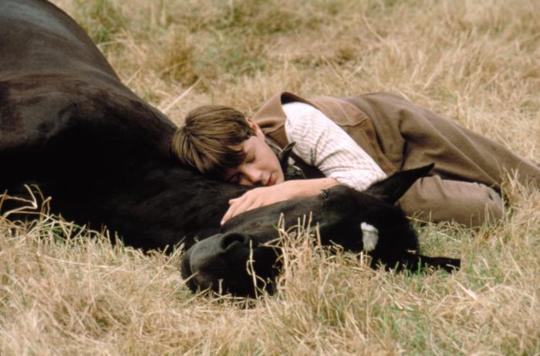
MSDBLBE EC001First there was The Secret Garden, and then there was Black Beauty. I was such a horse-girl when I was child. There was an anthology about unicorns in my elementary school library that I checked out once a month to reread the stories. This lead me to selecting books because there was a horse on the cover, and I even fooled myself into thinking I liked cowboy books for more then their trusty steeds. Eventually, the librarian placed Black Beauty in my hands, a story I already knew well.

When it was time to relax with a movie, my parents sat us down to classics, The Secret Garden which I mentioned in my last article, and Black Beauty being two of that exceptional collection (more to come). Back then, I almost couldn’t tell these two films apart and I’d convinced myself that Dicken’s little white pony was Merrylegs, Black’s best little friend from his happier days on the estate with Ginger. (Especially because Andrew Knott played roles in both movies – ah, young love).

MV5BMjEwNTc3NzI4NF5BMl5BanBnXkFtZTcwOTk3MDcyMQ@@._V1_SY317_CR10,0,214,317_For the horse-girl inside me this storyline could not be more enchanting. Anna Sewell caught the voice of a horse in the time when these gorgeous animals were as useful as they were objects to their owners. Only a lucky horse would end up being cared for the way a little girl would want to read. Sewell’s horse star, Black, met all sorts of masters who loved him and abused him, and finally came to rescue him. You can only imagine this story being an eye-opener for some horse owners to see a personified horse carrying out the standard work of pulling carts and wagons of hay with masters that seem unaware that there is life in the creature they whip. It had a great effect on me as a little girl and only added to the empathy I felt for life.

What amazes me is how this classic was brought to the screen and in a successful way. A horse narrates the story in the book and in the film. There is very little dialogue that moves the scenes and human involvement is coincidental for the most part. As a child, these story telling maneuvers might be overlooked, but as an adult there is always a sense of humor when an animal’s voice tells the story, (two horrifying examples come to mind; one with a blue dragon and another with some wolves in a vampire romance). However, as an adult you can sit down to this movie and enjoy the voice of Black Beauty. It is another great tale to read over and over again, or view over and over again, as your life redevelops the story lines and the movie allows you to do this, humor free.

Adventure, smiles, heartbreak and the constant journey for a home and acceptance fill the pages of this book. As a child, I knew this story was great, even if I didn’t understand the term ‘classic.’ It is yet another story from our childhood that shows what film adaptation can be, and should be, about. In short: a simple, honest expression of the words that have captivated readers of all ages.

And on that note, I have a movie to watch. 

Was Black Beauty a staple in your childhood? Tell us about your favorite memory in the comments!