In which Dorin casts pretty much every character you can think of for her ideal live-action version of The Last Unicorn by Peter S Beagle.
iTunes – Twitter – Facebook – Tumblr – YouTube
 The hosts are back to discuss about the film adaptation of Insurgent, the second film in the Divergent series. Listen to them talk about their likes, dislikes and concerns for the third installment.
Also check out our episodes on Divergent (book and film) and Insurgent (book).
 Dorin and Kendyl sit down to talk about Adam Rex’s novel The True Meaning of Smekday. Funny, sweet and surprising, this is another one that we love discussing, especially since we forgot that we didn’t actually live through these events ourselves.
 This time, we’re sitting down to watch the 1989 version of Batman, talking through the fun, the dark and the slightly unbelievable.
 Book readers and non-readers alike were unimpressed by the film Seventh Son, based on Joseph Delaney’s The Last Apprentice series. This one is going down in Adaptation history as one of our least favorite, and a gigantic missed opportunity for what could have been a great movie series.
It took my small town theater a week to get The DUFF, based on the book by Kody Keplinger, after its release date and the waiting built up my anticipation even more than normal. I got to the movie theater with my bestie, we got comfortable in the weird 60s chairs that don’t allow a person to sit up quite right and waited for the movie to begin. Finally the lights flickered out and I am SO excited to see the how they took a book I loved and portrayed it on film.
Of course, Hollywood totally screwed it up…
 By the end of the movie I had turned to my friend more than a dozen times saying, “This is not a thing!” or “That NEVER happened!” and my all-time favorite, “Why the hell did they decide to do that?!” Needless to say, I was more than a little disappointed to walk in and see that not only had they changed the significance of certain characters, they had completely made up story lines about others!
Let me start off with Bianca, the main character in this film who is played by Mae Whitman. I love Mae Whitman; she is a great actress no matter what the medium. Her portrayal of Bianca is probably very good for what the scriptwriters gave her. However, the actual character they wrote was so two dimensional I was missing all the actual character. Bianca was supposed to be independent, stubborn, unique, smart and mildly damaged. She had so much depth and feeling and you could really sense that from the book. The character in the movie, while entertaining at times, was superficial and mainstream.
Wesley, played by Robbie Amell, was actually pretty much what I expected; a cocky jock that can have any girl, but is still pretty charming with more layers than one might initially think. But his Yoda persona to Bianca was a complete and utter creative addition by the writers and directors. Why they thought they needed to build in that kind of relationship with Bianca to get girls to like him is beyond me. I much preferred the way that they fell for each other in the book. Slowly, by actually talking, sharing bits and pieces of themselves and being completely vulnerable. A funny montage of Bianca trying on horrible outfits did nothing for me as far as their relationship went.
Now, let’s talk about how Hollywood once again made Dad the bad guy. In the book, Bianca lives with her father while her mother is absent most of the time. They got her career right, just not how she came about it. She was simply unhappy after her parents died and her husband encouraged her to find an outlet. What she found was an outlet from her family. This left her husband broken and Bianca trying to pick up the pieces, her only comfort her growing pseudo-relationship with Wesley. I still don’t understand the reason for the switch. Maybe to make it more appealing to teenage girls who tend to relate better to their mothers? But I would have like to have seen how the world actually reacted to a woman leaving her family by choice.
Another character that was completely changed by the powers-that-be is Toby. They took him from an adorable geek to a cheesy musician with an awful voice. What was wrong with a geeky Toby? It was more in the theme of Bianca’s character that her crush would be an academic with little to no care as to what other people thought. It made Bianca feel more shallow by having her crush on a musician that she had never even spoken to. To top it all off, they made him an awful “DUFF” user. When in reality, they actually mildly hit it off in the book for a while.
Madison on the other hand was sort of a non-character in the book. She was mostly just a chick that Wesley had slept with a few times. Apparently every teenage girl has a beautiful girl that causes her hell in high school. I will admit that it was an interesting take on the mean girl though. Very modern and brought a massive controversial issue that has been making the headlines of late: Cyber bullying. In a technologically driven age the capacity for “anonymous” bullying online has run rampant. I was glad they brought that issue into the movie.
I could go on and on about the many things that were changed, but that would make for an extremely long post and I am getting way too long winded as it is. Despite all the above complaints, I did think that, overall, the movie was very good. I laughed my butt off along with the rest of the people in my theater. I wish that they had stayed closer to the book storyline, but they did keep at least one of the major messages.
Everyone has insecurities. Everyone struggles with liking who they are. We just have to learn to accept and love ourselves for the individual weirdoes that we all are.
 Our team geared up for the new live-action Cinderella by reading and watching an insanely large amount of versions of the classic tale, from the 7 BC Egyptian Rhodopis to the 2011 A Cinderella Story: Once Upon a Song. We get into themes of beauty and it’s worth, social status and neglect as well as why there are just SO many birds.
Make sure you let us know in the comments if there are any other versions we should pick up!
If you’re anything like me coming off of Oscar season, you have a long list of films that are now on your To Watch list (okay, you had that list on the journey up to the Oscars, but it’s ever more important now that the films have actually won something). I know it’s tempting to prioritize that list by which films won the most awards (those are surely the best ones, right?), but if you were to ask my opinion, Still Alice belongs at the top.
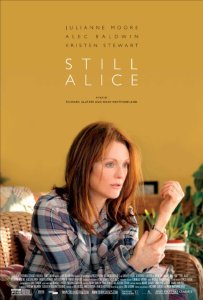 Sure, it’s not flashy like the other winners. Birdman looks like it’s filmed all in one shot. The Grand Budapest Hotel has that traditional Wes Anderson look. The Theory of Everything is the story of someone with a household name.
And Still Alice is about a fictional women with early onset Alzheimer’s disease. This is not a feel good movie. In fact, I started crying about ten minutes in and didn’t stop until the end. But it’s simple and insightful and full of performances that make the characters as real as anyone. That’s the point. Alice might not be real, but her story shows us the struggle of the 5 million people in the United States diagnosed with Alzheimer’s.
It’s no coincidence that the only awards Still Alice was nominated for were for Julianne Moore as Best Actress or that she won every time, not just at the Oscars, but the Golden Globes, the BAFTAs, the SAG Awards, and the Critic’s Choice Awards. The film is told from Alice’s perspective, which is why Moore’s role is so important (though I would argue that Glatzer and Westmoreland’s direction is worth some awards as well). She is the movie, it all hangs on her character, on her performance, and dear god does she deliver. The character goes through so many emotions in such rapid succession, each with its own layers of what she is actually feeling and what she wants her family to see. Amazingly, Julianne Moore pulls all this complexity off beautifully.
The story itself has a fairly simple concept that packs a big punch. Alice is a linguistics professor at Columbia University whose career, life and self-worth is partially tied to her intelligence. Education is a priority with her and her doctor husband, something they have managed to pass on to two of their three children. So when Alice’s memory starts to slip, she feels like her identity is being taken from her. In a semi-ironic twist, the person who most understands her isolation is her wayward, non-collegiate daughter played by Kristen Stewart in an equally moving performance.
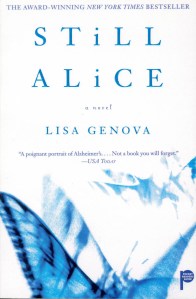 Still Alice is based on the novel by Lisa Genova, who has a degree biopsychology and a PhD in neuroscience. Still Alice was her first novel, but since then she has tackled other types of cognitive impairments in Left Neglected, Love Anthony and her upcoming novel Inside the O’Briens.
I have not read the book myself and I’m not sure that I’m planning to (if I cried that much in the movie, I might die of dehydration reading the book), but the film did make me want to check out Genova’s other novels. From what I can tell, they are each written from the perspective of the impaired person, giving voice and insight to people suffering with not being able to express themselves.
That’s what I took away from the film – the frustration, anger and embarrassment that comes from not being able to say what Alice wants to say, from simple everyday thoughts to what she’s going through overall. Such insight and understanding should surely be enough to move this to the top of your list of films to see.
 If you couldn’t tell by the length of the episode, Dorin and Kendyl have a lot to say about Kingsman: The Secret Service and the original comics by Mark Millar and Dave Gibbons. They discuss the improved themes, the interesting characters and, of course, the annoying sexism.
 Our hosts are back, discussing the second book in the Divergent trilogy, Insurgent. There is a lot to go over in this book: visiting the different factions, Tris’s PTSD, the motivations of the untrustworthy and how this book stacks up against the last. Listen and tell us what you think about all these things and more!
Check out our episodes on Divergent the novel and the film.
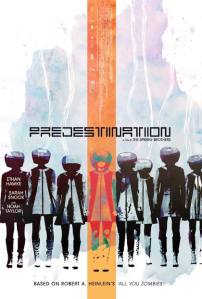
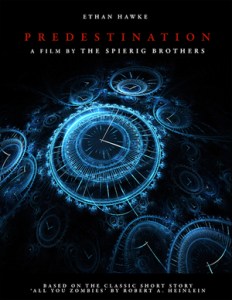 Recently, a commenter turned us onto the film Predestination (2014) and the short story it is based on, “All You Zombies”, written by Robert A. Heinlein in 1958, so I checked them out.
Do not be misled by the short story title, neither the story nor the film have anything to do with actual zombies. The only mention of zombies is the same in each: “I know where I come from- but where do all you zombies come from?” Instead it has to do with time travel and paradoxes. The short story is a feat because, although these days time travel and time paradoxes are almost cliché, this was the first of its kind. Building off the fictional device created in the mind of H.G. Wells, the time machine, Heinlein creates a situation that is one of a kind.
The film starred Ethan Hawke and Australians Sarah Snook and Noah Taylor. Sarah Snook won the well-deserved AACTA award for Best Actress for it. The Spierig brothers directed and filmed it in Melbourne, Australia – though it takes place in America.
From here on, I will be spoiling both (but scroll to the end for a spoiler-free wrap up).
This film made my nose bleed. Not literally, of course, but it is the kind of movie that if you think about it too hard, you might have an aneurism and blood will shoot out your nose. This is not to say that it is a bad film, in fact, I enjoyed it, but things can feel a bit convoluted when dealing with time paradoxes or time travel in general. As the doctor says, “time isn’t linear…it is like a big ball of wibbly wobbly, timey wimey… stuff”, that is how this movie is presented.
 Ethan Hawke’s character is a time agent who has just recovered from a serious injury while after his foe The Fizzle Bomber. He jumps back in time and strikes up a conversation with a man, who writes confessionals under the pen name “The Unmarried Mother”. Because of that strange pen name, we then get a bet for a bottle of booze and this man’s life story, which begins “when I was a little girl…”. Sarah Snook played this character, Jane when a girl – John as a man.
This story takes a while, and unlike the short story, we don’t really know why we are hearing it until after it is over. But after learning about a man that “The Unmarried Mother” fell for, was left by, bore a child by, and ruined him completely, Ethan Hawke asks, “if you saw him again and knew you would get away with it, would you kill him?” This sparks most of the time travel in the film and this is where it frays and makes your head hurt, in a good and crazy way.
We already knew that the woman from the story and the man that was in the bar are the same person, but when they go back so this man can find the man who ruined his life, the only person he bumps into is himself, or rather herself. Come to fund out, he dated himself and bore a child with himself.
CRAZY.
 Then Ethan Hawke goes to the hospital to snatch the child and drop it off at the orphanage, the same date and place where Jane was left. This means that the baby that this one person had by himself, the baby is also the same character. All Jane/John. Ethan Hawke recruits John to his time agency and says, “now that you know who she is, you now know who you are, and if you think about it you will know who the baby is and who I am.” Or something of the like, which would make you think that Ethan Hawke is the child, but if that is that case, he is also Jane/John.
To put the sprinkles on this swirly cake of madness, after he recruits himself, he is then decommissioned as an agent, and for his last placement, he chooses to go after his nemesis, The Fizzle Bomber. If you get the drift at this point, you would not be surprised when – BLAM – Jane/John/Time Agent is also, The Fizzle Bomber. The film basically ends with young Ethan Hawke killing his bomber self and claiming that he would never turn into that guy. But aren’t some things predestined?
Trying to connect all the dots and trying to think, “if he recruited himself then how…?” And just trying to tie all the ends together to make something more linear and comprehensible, but you really can’t. It just keeps swirling around in your head.
The film is really a great adaptation of the story, and I actually feel it improves upon it. The way the story is laid out, finding out who the child is and reveals like that are not as dynamic, but I watched the film first, so I knew all the twists. Still, I wondered if I would have understood all of it without having seen the film.
END SPOILERS

The film expanded on what was on the page, only changing a few minor things and adding in a few characters, like The Fizzle Bomber, who is just a Fizzle War that barely happened because of the time agents work in the story.
The film really understood the idea of a time paradox and played off it well, as well as the themes and tone. Once I got the idea of where it was going, I did predict much of the ending, but it did not make it any less enjoyable. It is all a bit mad, but I like a bit of madness.
I would recommend the story to everyone. The film on the other hand, although I do like it, might be too much to handle for some people (see meme below). The story is a bit toned down and easier to swallow, but the film is a bit more fun. However, I think I know where all the zombies come from… they come from watching this film.
 When I saw the movie preview for The DUFF I was most definitely intrigued. It looked beautifully hilarious as well as uplifting and hopeful for the everyday girl that doesn’t always feel like she is the beauty that she is. Of course the Mean Girls/My Fair Lady vibe was not unappealing as well.
 Adaptation Podcast