Here at Adaptation, we are soon to be recording our 100th podcast and we just passed the one-year anniversary of our YouTube channel. *Pops the champagne*
So let’s take a moment to discuss the foundation of what we do…
What makes a good adaptation?
It’s a funny thing to discuss because I often wonder if it is a matter of opinion or biased by what a reader feels or knows about the story and characters.
Let’s look at a few examples of different adaptations:
Atonement (2007) – based on the novel by Ian McEwan
This is an example of a “perfect” adaptation. I put the quotes around perfect because I mean it in no way as a definitive “this is a perfect adaptation” and more of a description of how it translated book to movie. This type of adaptation is one that is more literal.
I had read the book a few years before the film opened and I was amazed at how the film was really just a visual version of the book. I thought to myself, “Now this is a great adaptation”, until I told my parents, whom I had been watching the film with, why I felt that way. I asked them “Do you want to read the book? I have it.” However, because I said that the film was exactly like the book they said no. Why would they bother?
That saddened me because I absolutely loved the book, and it is something that we have mentioned in podcasts: We like it when the movie makes you want to read the book (again) and vice versa.
The thing is, even when I gripe and nit-pick at some of the films on podcasts here, when we talk about an adaptation, I do feel that there should be signs of someone’s interpretation. But how much should be strictly accurate and what exactly should be up for the creator’s interpretation?
My Sister’s Keeper (2009) – based on the novel by Jodi Picoult
I saw this film without having read the novel and I really liked the film. Of course, those of my friends, on and off the podcast team, who had read the book, were infuriated! The ending was completely different from the book; in fact you could say they made it totally opposite.
Now, we always try to say here at Adaptation that books and films are two different animals and we have to keep them separated. I agree, and I try- oh how I try- but is there a breaking point? Was it right or wrong of the filmmakers to change the ending? Did they feel that the ending they used was a little more believable or true to life? Does that matter?
The film itself had good pacing, character development, and acting. It flowed together well and was never slow or boring or abrupt. So, would we consider it a good adaptation? Or just a good film?
Stardust (2007) based on the novel by Neil Gaiman
This is one of those adaptations that came out nearly 10 years after I had read the book. Yet, this book is one that was so unique and such a great read that it stuck with me all that time. When the film was about to be released, after working on it with the filmmakers, Neil blogged a warning to readers and lovers of the book: “The movie will be different”.
I was so glad for that because when I saw the film I expected changes. I even wish I could have known about them in more detail, because it had been so long since I’d read the book. While watching the film, I wasn’t always sure if something had been in the book or not. But5 maybe that is not such a bad thing.
However, there were many things that I knew for sure where not in the book, and some of them were things that I felt changed the feeling of the story. The book was much darker and grittier than the film, which was produced by Disney. They really did Disney it up with a happily-ever-after and things of the like. It was a family friendly movie that many kids and parents alike enjoyed.
So, can I really knock it? Was it so bad for me that I can call it a bad adaptation? Most of the story was intact and the ending wasn’t so different, unlike my previous example. It spread the word about the novel and more people now know who Neil Gaiman is… but still the feel was different.
Total Recall (1990 & 2012*) and Blade Runner (1982) based on Philip K. Dick’s short story “We Can Remember It For You Wholesale” and novel Do Androids Dream Of Electric Sheeprespectively
*Technically the 2012 version is an adaptation of the original film and neither the short story nor P. K. Dick is credited.
Here are examples of taking either a very short story or a vague idea and running with them.
Total Recall’s original material is much shorter than you would expect and not nearly the number of characters in the film (1990). Basically, the idea of the character having memories in his head that have been implanted, who later finds out that there is something more going on. But in both screenplays, the story is much more out there than in the original work. They required so much expansion.
Blade Runner’s original novel is similar. Again, the ideas were in the film where Androids are trying to pass themselves off as human, and a bounty hunter is out to retire them, but there are so many things that were cut and others that were added.
I can’t say for sure that the reception for Total Recall in 1990 was a good one, but I know that Blade Runner by Ridely Scott is still considered a great film and the director’s cut version was even reviewed very recently by The Telegraph, saying that it “is a masterpiece of dystopian science fiction on film”. I myself love both of these films and was honestly surprised to read the original material. I love both written and screen work for different reasons- and dislike them for different reasons.
Is this a case of interpretation being the right thing?
Conclusion- if there can be one
Even after thinking about these examples of adaptations (and there are countless more, just check out our podcasts), it is hard to really pinpoint what makes a good adaptation. I would not want to leave this post without some conclusion, but maybe there just isn’t a definitive one. All I have is my opinion, and I can’t say that it hasn’t changed depending on what adaptation we are discussing.
From these examples, in my humble opinion, this is what makes a good adaptation:
- The overall feel and/or tone is the same
- The changes mean something: i.e. if they took something in a different direction, they made sure to keep continuity with it and did not half-ass it, leading to a “why did they even bother?” moment
- If they needed to add to the story, such as with a short story, following a set cannon, if possible, is the best bet. If not, see first bullet point.
- The so-called adaptation did not seem like they had read the synopsis of the story and then run with it in whatever direction they felt without really consulting the original material. (This can be debatable, of course, because if they expand on the story beyond the original material, much like the previous bullet point, it can become an amazing piece of work)
- While it is not necessary to stick to the story exactly, the changes or additions need to add something to the whole of the story.
(Kick Ass 1 & 2, might be considered good examples of this)
- AND (most importantly) it was an enjoyable experience! Because if it wasn’t, that is already an indicator that it was not very good.
In the end, I do think that it is a matter of opinion on whether an adaptation is done well or not. It is sometimes easier to say when it was not done well at all (*coughs* Al. Vamp. Hunt. Dig.).
What do you think? What can I add to my list on what makes a good adaptation? Do you agree or disagree with me on either good adaptations in general, or one of my examples?
 Dorin and Kendyl discuss the children’s book by Judith Viorst along side the film and are extremely pleased with how well the themes are portrayed on screen and how the additions take them one step further. There might be a little rant about the word “Fommy” and the road-safeness of the vehicle, but overall they give it a thumbs up!
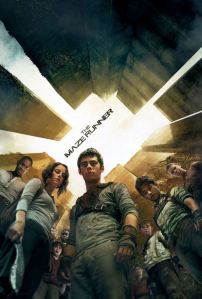 Another in a long line of young adult dystopian tales has hit the big screen. The Maze Runner based on the novel by James Dashner came out a few weeks ago and I finally got the chance to see the film. Though I have never read the books, I have heard good things from those that have.
 After seeing the film adaptation of Gone Girl, our hosts discuss how Gillian Flynn brought her novel to the screen. While many things were stunningly accurate, there were still a few bits that our hosts missed, and other bits that felt even more intense than the book.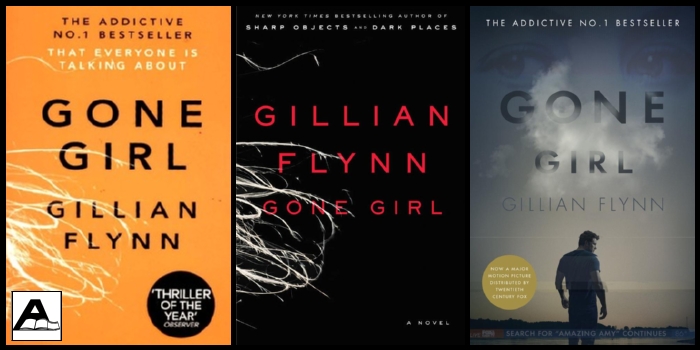
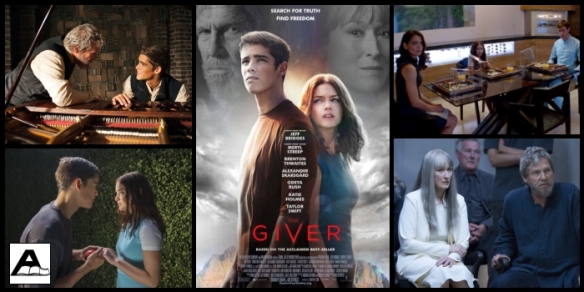 After being extremely apprehensive about the film adaptation of Lois Lowry’s The Giver, the hosts are surprised to find that despite popular opinion, they rather liked it. They discuss the focus on emotional depth and the gorgeous visuals as pros for this film, but as usual, can’t help but pick out the differences that go on their “con” list.
 In this two-in-one episode, Dorin and Kendyl discuss the novel If I Stay by Gayle Forman and it’s film adaptation. After falling in love with all the characters in the novel, the duo is rather harsh on the movie’s characterization, but give it credit for resisting the urge to be overly sappy.
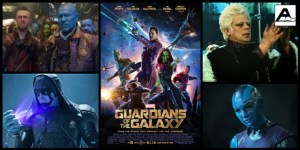 Dorin and Kendyl sit down to talk about the film that has dominated this summer! It’s been a while since Marvel has introduced new misfits into it’s film universe and Guardians of the Galaxy has certainly held up to the hype. The only question is where are we going from here?
 In this commentary episode, the girls try very hard not to sing along with The Lion King… and mostly succeed while discussing Disney’s musical adaptation of Hamlet with lions.
 Adaptation Podcast