Here’s what the Adaptation staff have been up to in the month of June!
Staff Recommendations – June 2015
3
Here’s what the Adaptation staff have been up to in the month of June!
 Kendyl and Ryan sit down to watch The Terminator (1984) and discuss the weirdness of time travel and the rudeness of the person that decided to mow the lawn outside their window during our podcast.
On June 7, 2015 the great actor and icon Christopher Lee passed away due to heart failure. He was 93 years old. Most people know him for his portrayal of Saruman in The Lord of the Rings and The Hobbit trilogies, as well as Count Dooku in the Star Wars prequel trilogy. But there is so much more to him than that, and his passing is a great loss.
The talk in my family about him over the years was that he was going to act until he died, and that after he died, he would will his body to be used as a prop to be in even more films forever, however morbid that thought seems now. We really thought he was never going to die, we thought he would go on forever.
He came from an amazing lineage and his life spanned some amazing eras in history, and he left us all with a legacy of films and so much more. It is hard to list all the great things about him and what he has done, but I’ll give some highlights and Tid-bits.
Christopher Frank Carandini Lee—oh excuse me—SIR Christopher Lee, was born May 27, 1922 in Belgravia, London, England and was knighted for services to Drama and Charity on June 13, 2009 as part of the Queen’s Birthday Honors. Prince Charles knighted him, and because of his age he was excused from the usual requirement of kneeling…but I would say because Christopher Lee is awesome and he kneels to no one.
 He and his older sister Xandra were raised by their parents, Contessa Estelle Marie (Carandini di Sarzano) and Geoffrey Trollope Lee, a professional soldier, until their divorce in 1926. Lee’s maternal great-grandfather was an Italian political refugee, while Lee’s great-grandmother was English opera singer Marie (Burgess) Carandini. Lee also descended from the Emperor Charlemagne of the Holy Roman Empire and was related to Robert E. Lee, the Confederate general. Later, while Lee was still a child, his mother married (and later divorced) Harcourt George St.-Croix (nicknamed Ingle), who was a banker. Through his stepfather, became step-cousin to Ian Flemming, the creator and author of the James Bond series.
Tid-bit: Lee was Flemmings choice for Dr. No (1962). Lee enthusiastically accepted, but by the time Fleming told the producers, they had already chosen Joseph Wiseman for the role. Lee finally got to play a James Bond villain in The Man with the Golden Gun (1974), in which he was cast as the deadly assassin Francisco Scaramanga. Lee said of his performance, “In Fleming’s novel he’s just a West Indian thug, but in the film he’s charming, elegant, amusing, lethal.…I played him like the dark side of Bond.”
Through his long life, he was more than just a great actor, he was a man of honor, a loving husband and father, a Classically trained singer and sometimes a fanboy.
Tid-bit: Apparently he geeked out when he bumped into J.R.R. Tolkien randomly in a pub, who gave Lee his blessing to play Gandalf in any future Lord of the Rings film (although he didn’t play Gandalf, he made a fabulous Saruman). He also once declared himself to be an unconditional fan of Gene Hackman.
He didn’t start acting until he was 25 and it was hard for him to break into it with supporting roles because he towered over the leading men at 6’ 5”.
Tid-bit: He is entered into the Guinness Book of World Records as “The Tallest Leading Actor”.
Still, he was able to make a go of it starring in many Hammer Films horror films, but when they got schlocky he tried to break away from them.
Tid-bit: Lee agreed to star in the 1966 Dracula: Prince of Darkness, but he felt the script was so awful he adamantly refused to say any of the dialogue. Hammer decided that it was far more important to have a mute Lee as star as opposed to anyone else, and thus had Dracula hiss and yell through the film. In his autobiography, he relates his first meeting with Peter Cushing during production of The Curse of Frankenstein (1957), in which he played the monster. Lee stormed into a dressing room where Cushing was sitting and angrily yelled “I haven’t got any lines!” Cushing replied, “You’re lucky; I’ve read the script.”
But what did he do in the first 25 years of life? A hell of a lot more than most 25 year-olds can say!
 When Lee was nine, he was sent to Summer Fields School, a preparatory school in Oxford whose pupils often later attended Eton. He continued acting in school plays, though “the laurels deservedly went to Patrick Macnee (The Avengers, 1969).” Lee applied for a scholarship to Eton, where his interview was in the presence of the ghost story author M. R. James. He placed eleventh and thus missed out on being a King’s Scholar by one place. His stepfather was not prepared to pay the higher fees that being an Oppidan Scholar meant and so he did not attend. Instead, Lee attended Wellington College, where he won scholarships in the classics, studying Ancient Greek and Latin. Aside from a “tiny part” in a school play, he didn’t act while at Wellington. At age 17 and with one year left at Wellington, the summer term of 1939 was his last. His stepfather had gone bankrupt, owing £25,000.
Then, his mother and stepfather separated, and Lee had to get a job. While looking for work, he saw the death of the murderer Eugen Weidmann in Paris, the last person in France to be publicly executed by guillotine.
Tid-bit: Lee was quite interested in the history of public executions, and reportedly knew “the names of every official public executioner employed by England, dating all the way back to the mid-15th century.”
World War II soon broke out and Christopher Lee volunteered. He joined the Royal Air Force and became an intelligence officer for the Long Range Desert Patrol, a forerunner of the SAS, Britain’s special forces. He fought the Nazis in North Africa, often having up to five missions a day. During this time he helped retake Sicily, prevented a mutiny among his troops, contracted malaria six times in a single year and climbed Mount Vesuvius three days before it erupted. Later he moved to Winston Churchill’s even more elite Special Operations Executive, whose missions are still classified. The SOE was more informally, and fabulously called The Ministry of Ungentlemanly Warfare.
Lee never said anything specific about his time in the SOE/SAS, but he has said: “I was attached to the SAS from time to time but we are forbidden—former, present, or future—to discuss any specific operations. Let’s just say I was in Special Forces and leave it at that. People can read in to that what they like.” Further he once said: “I’ve seen many men die right in front of me—so many in fact that I’ve become almost hardened to it. Having seen the worst that human beings can do to each other, the results of torture, mutilation and seeing someone blown to pieces by a bomb, you develop a kind of shell. But you had to. You had to. Otherwise we would never have won.”
Tid-bit: During his death scene in Return of the King (only included in the Extended Edition to Lee’s disapproval), director Peter Jackson was describing to him what sound people getting stabbed in the back should make. Lee gravely responded that he had seen people being stabbed in the back, and knew exactly what sound they made.
 There is so much more I could say about his time in the war, but then this post would be so much longer than it already is. So I will finish this section with this, by the end of the war he’d received commendations for bravery from the British, Polish, Czech and Yugoslavian governments. And this was all before the age of 25.
Since then, he has had an amazing career, because besides the fact that he was a decorated hero, he was also amazingly talented—if the classically trained singer did not give it away, here is more:
Still early in his career, Lee dubbed foreign films into English and other languages including Jacques Tat’s “Mr. Hulot’s Holiday”. Sometimes he dubbed all the voices including women’s parts. Douglas Fairbanks, Jr., recalled that Lee could do any kind of accent: “foreign, domestic, North, South, Middle, young, old, everything. He’s a great character actor”.
Lee spoke fluent English, Italian, French, Spanish and German, and was moderately proficient in Swedish, Russian and Greek. Lee stated in an interview that he was “conversationally fluent” in Mandarin.
Tid-bit: He was the original voice of Thor in the German dubs in the Danish 1986 animated film Valhalla, and of King Haggard in both the English and German dubs of the 1982 animated adaptation of The Last Unicorn.
Besides that, Lee was a world champion fencer.
Tid-bit: In Star Wars Episode II: Attack of the Clones (2002) and Star Wars Episode III: Revenge of the Sith (2005), in which he played the villainous Count Dooku. He did most of the swordplay himself, though a double was required for the long shots with more vigorous footwork. Lee’s face was imposed on the double’s body. Lee mentioned that in the last 40 years, he has done more sword fights than any other actor, but “not anymore.”
Mostly, he has played the villain, which he did so well that I wouldn’t even count it as a demerit, and he has been in so many films that he is in the Guinness Book of World Records for Most Screen Credits (2007) which was 244 at the time, starring in the most films with a sword fight (17 films), being the most connected actor along and being the Tallest Leading Actor.
Tid-bit: Guinness says that he connects to virtually any actor in 2.59 steps—take that Bacon!
 However, he later admitted that his film work was not always chosen on quality but often on whether it could support his family. In fact, he has a history of being considerate to his loved ones, and caring for their well-being. And he got to be awesome while doing so.
Lee was engaged for a time in the late fifties to Henriette von Rosen, whom he met at a nightclub in Stockholm. Her father, Count Fritz von Rosen proved demanding, getting them to delay the wedding for a year, asking his London-based friends to interview Lee, hiring private detectives to investigate him, and asking Lee to provide him with references, which Lee obtained from Douglas Fairbanks, Jr., John Boulting and Joe Jackson. Lee found the meeting of her extended family to be like something from a surrealist Luis Buñuel film and thought they were “killing [him] with cream.” Finally, Lee had to have the permission of the King of Sweden to marry. Lee had met him some years before whilst filming Tales of Hans Anderson and received his blessing. However, shortly before the wedding, Lee ended the engagement. He was concerned that his financial insecurity in his chosen profession meant that she “deserved better” than being “pitched into the disheveled world of an actor.” She understood and they called the wedding off (though she must have later been saddened that it didn’t turn out that way).
Later, Lee was introduced to Danish painter and former model Birgit “Gitte” Krøncke by a Danish friend and his wife in 1960. They were engaged soon after and married on March 17, 1961. They had a daughter, Christina Erika Carandini Lee (b. 1963) and were still married upon his death.
Beyond the serious note there, Christopher Lee had some fun in his life.
He was on the cover of Paul McCartney’s 1973 Band on the Run album (seen below), as well as the video for the song—which was a making-of for the cover.
 Around 1988, Lee agreed to play a vampire once more in an unproduced Dutch/Belgian comedy that was to be called “Blooper.” The script, written by Frank van Laecke, was commissioned because of the physical resemblance between Lee and Dutch opera singer Marco Bakker, as noted by Bakker’s wife, actress Willeke van Ammelrooy. Lee, a great lover of opera, got along well with both of them. The story concerned an opera singer called Billy Blooper (Bakker) who learns his father (Lee) is a vampire who’s teeth had gone rotten after eating too many sweets. Now whenever he bites anyone, instead of turning into a vampire, they became half-human, half-chicken (which sounds ridiculously campy and fun—and is right up my horror alley).
And yes, the rumors are true, Christopher Lee loved Heavy Metal.
Lee’s first contact with heavy metal music was singing a duet with Fabio Lione, former lead vocalist of the Italian symphonic power metal band Rhapsody of Fire (and currently a member of Angra), on the single “The Magic of the Wizard’s Dream” from the Symphony of Enchanted Lands II album. Later he appeared as a narrator on the band’s four albums Symphony of Enchanted Lands II—The Dark Secret, Triumph or Agony, The Frozen Tears of Angels and From Chaos to Eternity as well as on the EP The Cold Embrace of Fear—A Dark Romantic Symphony, portraying the Wizard King. He also worked with Manowar while they were recording a new version of their first album, Battle Hymns. The original voice was done by Orson Welles (who was long dead at the time of the re-recording). The new album, Battle Hymns MMXI, was released on November 26, 2010.
In 2006, he bridged two disparate genres of music by performing a heavy metal variation of the Toreador Song from the opera Carmen with the band Inner Terrestrials. The song was featured on his album Revelation in 2007. The same year, he produced a music video for his cover version of the song “My Way.”
His first complete metal album was Charlemagne: By the Sword and the Cross, which was critically acclaimed and awarded with the “Spirit of Metal” award from the 2010 Metal Hammer Golden Gods ceremony, where he described himself as “a young man right at the beginning of his career”. It was released on 15 March 2010. In June 2012, he released a music video for the song “The Bloody Verdict of Verden”.
On his 90th birthday (May 27, 2012) he announced the release of his new single “Let Legend Mark Me as the King” from his upcoming album Charlemagne: The Omens of Death, signifying his move onto “full on” heavy metal. That makes him the oldest performer in the history of the genre. The music was arranged by Richie Faulkner from the band Judas Priest and features World Guitar Idol Champion, Hedras Ramos.
In December 2012, he released an EP of heavy metal covers of Christmas songs called A Heavy Metal Christmas. He released a second in December 2013, entitled A Heavy Metal Christmas Too. With the song “Jingle Hell,” Lee entered the Billboard Hot 100 chart at #22, thus becoming the oldest living performer to ever enter the music charts, at 91 years and 6 months. The record was previously held by Tony Bennett, who was 85 when he recorded “Body and Soul” with Amy Winehouse in March 2011. After media attention, the song rose to #18.
Lee released a third EP of covers in May 2014, to celebrate his 92nd birthday. Called Metal Knight, in addition to a cover of “My Way” it contains “The Toreador March”, inspired by the opera Carmen, and the songs “The Impossible Dream” and “I Don Quixote” from the Don Quixote musical Man of La Mancha. Lee was inspired to record the latter songs because, “as far as I am concerned, Don Quixote is the most metal fictional character that I know.” His fourth EP and third annual Christmas release came in December 2014 as he put out “Darkest Carols, Faithful Sing”, a playful take on “Hark! The Herald Angels Sing.” He explained: “It’s light-hearted, joyful and fun.…At my age, the most important thing for me is to keep active by doing things that I truly enjoy. I do not know how long I am going to be around, so every day is a celebration and I want to share it with my fans.”
Rock on Mr. Lee, ROCK ON!
Tid-Bit: His one outspoken regret, or at least claimed it as his biggest mistake, was that he turned down Donald Pleasence’s role as Dr. Sam Loomis in Halloween (1978). Honestly, that would have been so amazing, but he did so many other fantastic roles that that one was no big loss.
I’m really glad that the last thing I saw him in was The Hobbit trilogy, because even though he is known for his villain roles, including Saruman, I always want to root for him, and seeing Saruman on the side of good felt like redemption, and a nice send off.
What I want to do now is to try to watch every film he was in—especially the ones I have no idea what they are about, like The Oblong Box (1969), and re-watch some that I didn’t realize he was in, like The Wicker Man (1973)—not the really bad Nick Cage remake, but the really interesting and thrilling original!
I suppose that will take me until I, myself, am 93. And in that way, and many others, I guess Christopher Lee really will live on forever.
In which Jess goes a little overboard in dream-casting not only Marissa Meyer’s Cinder, but her entire Lunar Chronicles series!
by Sarah J.
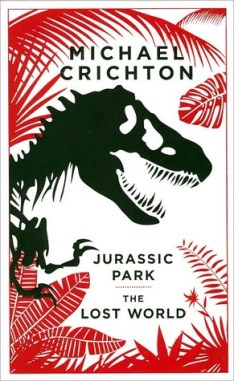
I fell in love with Jurassic Park the way most people of my generation did: sheer, abject horror intermingled with an intense curiosity and juvenile fascination with dinosaurs.
I first saw the film as a naïve five year old. My parents rented it on videotape from Blockbuster, the way we did things back then. I was not allowed to watch it at first, but after glimpsing the cover of the tape box and realizing that “holy bejebus, there’s dinosaurs in this movie!” I begged my mom to let me sit in. She thought it was going to be too scary; I thought it was going to be like a live-action version of The Land Before Time where people just got to ride around on dinosaurs. It didn’t take too long to figure out I was very wrong.
I don’t remember much from that first viewing. I remember crying uncontrollably in the first ten minutes or so, when a black guy got eaten by a velociraptor and the smarmy safari dude was unable to save him (turns out the guy wasn’t black, he was Costa Rican, but as a small child of mixed race heritage I just assumed every brown person was black, and also why do they always die first?). We had to pause the movie so my parents could calm me down, and after many reassurances that I was mature enough to handle it they let me keep watching. From that point on it’s all a fabulous blur. I know it was violent and probably not something a kid my age should have watched, but I was captivated.
 As I got older and eventually acquired and burned out my own tape of Jurassic Park, I realized that yes, the allure of dinosaurs was what had initially drawn me in, but what really kept me in was the science. I was ensconced by the reasoning behind it all. The high-tech facility, the people in lab coats rushing around creating these new animals, the DINO DNA! Even the (then very modern) look of the exotic resort was all a draw.
This is what captured my attention and fascination with the movie, but really made me stick around for the book. It wasn’t until my mid-twenties that I even got my hands on a copy, but once I picked it up it was nearly impossible for me to put down. For all intents and purposes the movie pretty much follows the novel: eccentric and ridiculously rich old man has way too much hubris, creates theme park, makes dinosaurs, invites team of specialists to inspect said park (and for some reason invites his useless grandkids to tag along), one specialist predicts doom, stuff starts to go wrong, roughly half of the people wind up dead, and we learn a valuable lesson along the way about playing God and also that birds are basically tiny dinosaurs in disguise. The end.
Where it greatly digressed from the plot of the original material was that one little detail I had wanted more of: science. The book spends a great deal of time setting you up to believe that the science used is a real possibility and it’s already happening; you don’t even get to that magnum opus T. rex stomping on cars scene until almost 200 pages in. Complex theories of math and science are cited numerous times, most notably by Dr. Ian Malcolm (portrayed by Jeff Goldblum in the film), who is described as being a genius with the personality of a rock star.
Pretty much every scene he’s involved in is just a way for him to explain some reason for why the entire park is going to blow up in everyone’s faces. He starts off by explaining the theory as basically as possible, then when people (usually the old rich dude, Hammond) fail to understand what he’s saying, he breaks it down with real world examples to slap some truth in their uncomprehending faces. To most people such a character could be described as pompous and conceded, but Malcolm’s redeeming quality is that he’s just always right, and he knows it, and that makes him bearable and, dare I say it, somewhat likeable.
(Also, in the film, he spends half the movie lounging around, wounded and sweaty, with an open shirt quoting scientific facts like its freaking Shakespeare. Be still, my heart.)
 My other favorite character to follow due to his sexy, sexy science brain is Dr. Alan Grant (portrayed in the film by Sam Neill). He’s a nerd in all the best ways, shown in the film as almost passing out in sheer joy at the sight of living dinosaurs. In the book he’s a bit more quiet and hands-on about his excitement, pretty much ignoring everyone when there’s a live specimen around to poke and prod at. My favorite scene of his is at the hatchery during the initial tour (another long section of the book filled with tons o’ science, and probably one of my favorite parts) where he sees a baby raptor in the nursery. Most of the others just pet it like a domesticated animal or ignore it completely, but Grant just picks that baby up and starts examining it like the greatest dang thing he’s ever found. He even flips it upside down to get a look at its nether regions, an act that scares the crap out of poor baby raptor and basically sends Dr. Wu (lead geneticist, portrayed by the smoldering B.D. Wong) into a barely controlled rage. Great work, Grant.
Side note: Dr. Grant is said to be a middle-aged dude with a beard wearing sandals, khaki shorts, and a Hawaiian print shirt. He’s pretty much your nerdy uncle that happens to be a paleontologist, if your nerdy uncle looked like Supernatural-era Jeffrey Dean Morgan going off on dino digs. Sorry, off topic, but these are the mental pictures I create while reading and it really does make everything that much more fantastic.
My last great player in this trio of fantastically scientific gents is Robert Muldoon (played by Bob Peck), the game warden of the park and aforementioned safari man that failed to save that poor worker from the raptor in the first ten minutes. Not only does he get the best lines in the film (“SHOOT HER!” “Clever girl.”) but his characterization is tweaked ever so slightly to make him more likeable on screen. In the movie he’s portrayed as a master of big game hunting ad an expert in animal behavior, and offers a lot of valuable insight into the hows and whys the dinos at J. Park are doing what they’re doing.
I wanted to like him as much in the book as I did in the movie, but I just couldn’t. Why? He’s a huge stinkin’ drunk and spends the last half of the novel sloshenly shooting a grenade launcher at a T. rex and playing chicken with raptors. Admittedly, that sounds pretty cool. But I’m definitely sure if he’d been about 100% more sober a few deaths could have been avoided. But you know, we all deal with the stresses of life in our own ways.
Extra side note: Bob Peck as Muldoon was spot on and I didn’t need to change a thing in my mind. Neither would I want to; him running around in those tiny safari shorts is a memory I will treasure forever.
The surprise player in the book was Donald Gennaro (unfortunately portrayed by Martin Ferrero). You may remember him as the slimy grease ball lawyer that died on the shitter during the T. rex attack scene. As soon as he was introduced I decided to develop a deep and determined disdain for him, but as the story unfolds Gennaro actually becomes one of the good guys. He’s basically the everyday man in this scenario. He knows nothing about science, animal husbandry and behavior, or theme park operations and is forced into this weekend trip where he’s asked to evaluate the safety and sensibility of all three of these major components. Even though he’s almost constantly be chased and almost eaten, Gennaro puts on a brave face and made it way further into this novel than most of the other Jurassic Park crew. It’s for this reason that I am claiming him the people’s hero of Jurassic Park, and the real casualty of the adaptation because let’s face it: we could replace Gennaro’s character with you or I, friend, and we probably wouldn’t have made it half as long.
 Overall, I give Jurassic Park the novel 10/10 stars. It doesn’t matter what draws you in. For me, it was the science aspect. For you, it could have been the action, or the adventure, or the early 1990s computer jargon I didn’t understand. Shoot, maybe you just really love dinosaurs. No matter who you are this book has something in it for you that’ll be worth taking away. If the success and enduring legacy of the film is any indication of the fascination we have with this story, then the book is sure to go down as a beloved classic.
Five year old me would be pleased with it. Traumatized and very confused, but pleased.
 Once again fitting two seasons into an episode, Jess and Jenn discuss season 1 of The Flash and season 4 of Arrow. Time travel, secret identities and character relationships all give the twins some feelings that may or may not be shared by the fandom at large. Listen and let us know how you felt about DC’s foray into crossover television!
In which Kendyl lists the actors that did their best to shine, despite being in awful adaptations.
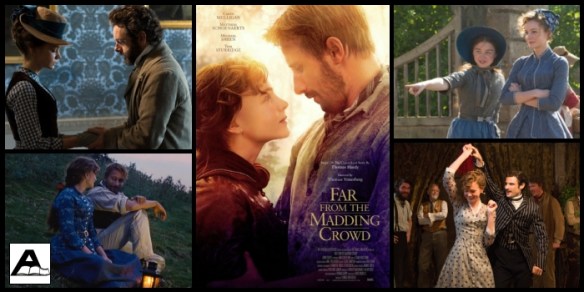 After loving Thomas Hardy’s novel as much as we did, it’s somewhat surprising that we ended up being really happy with Far from the Madding Crowd (2015). There were a few nick-picky things we would have done differently, but the film spurs additional understanding and conversations about the themes and characters that we loved and hated going in.
 Adaptation Podcast